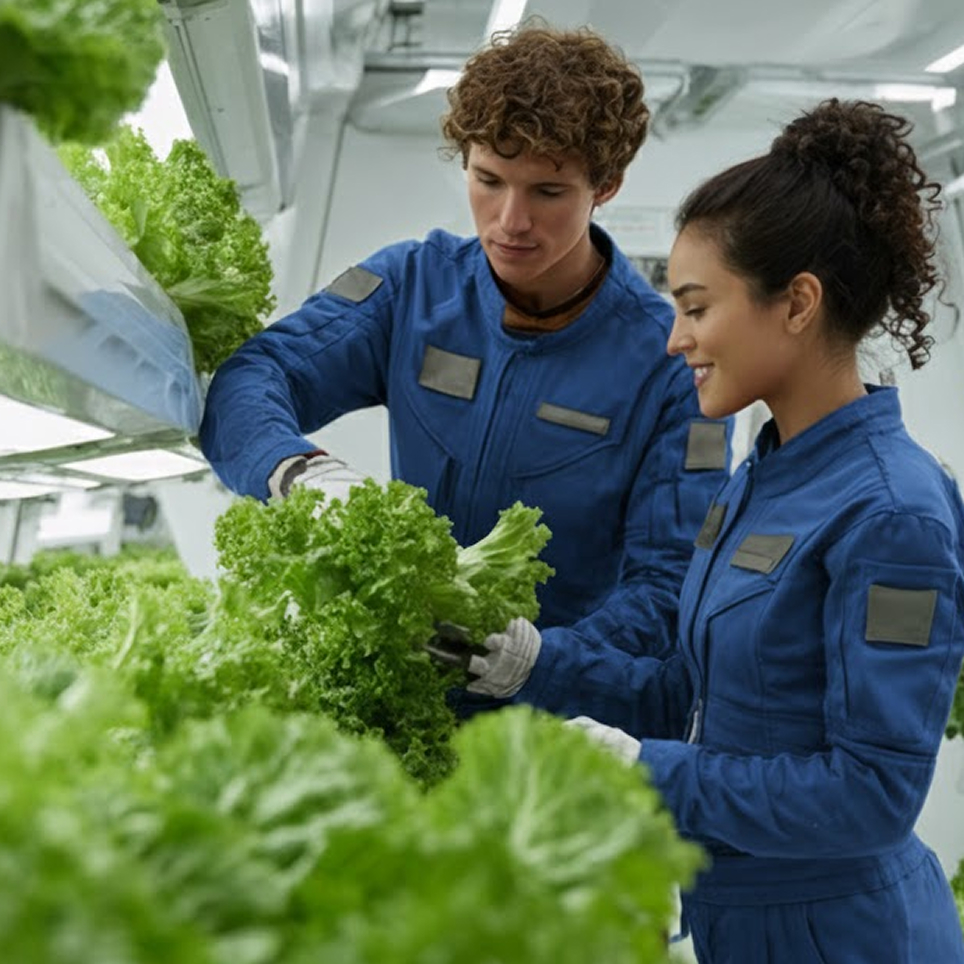
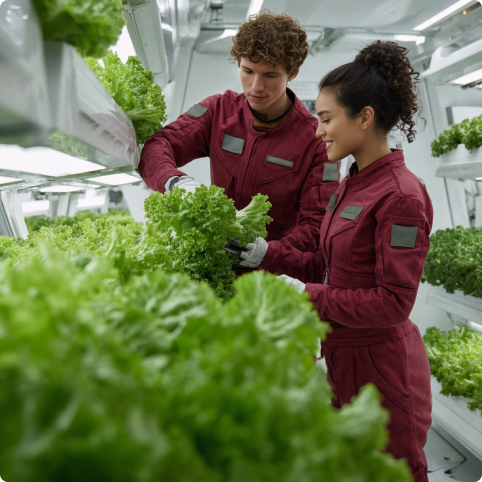
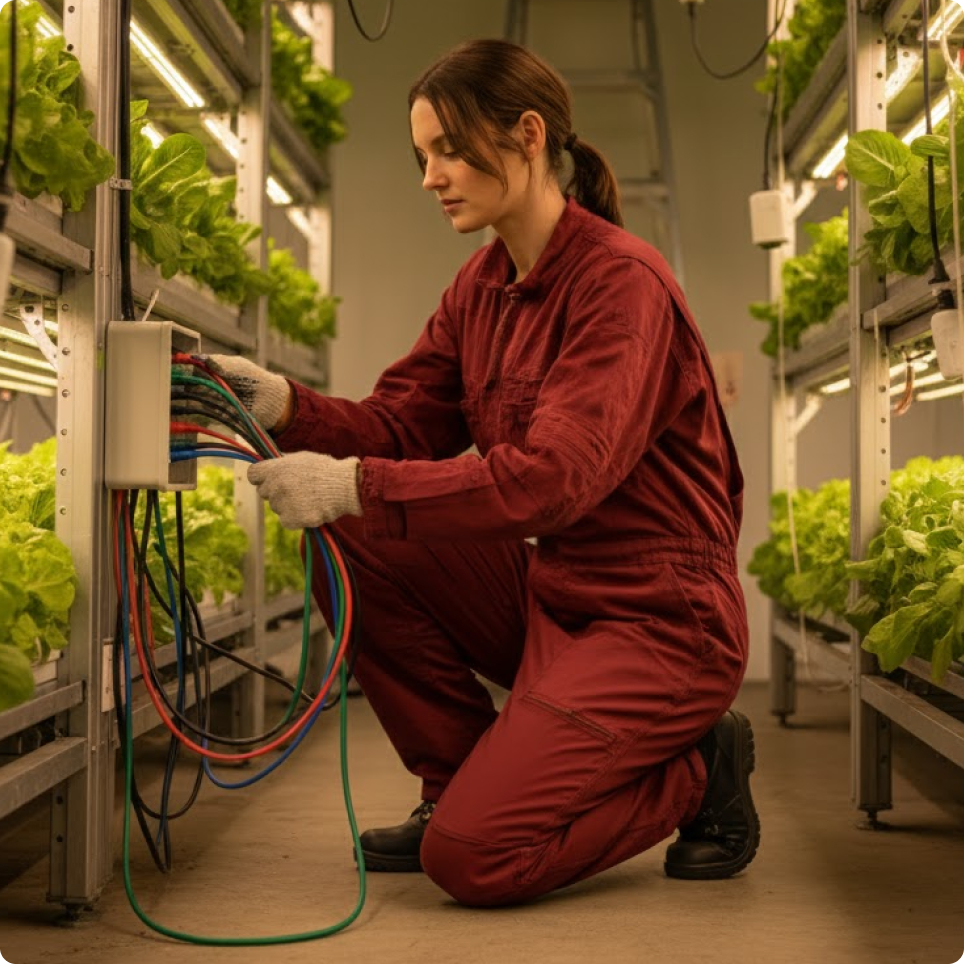
A 250 m² sealed habitat where every molecule of air, water, and carbon is recycled a miniature Earth for one year. Proven technologies for energy, atmosphere, water recovery, and vertical farming are integrated into one living system. Sensors track the balance continuously; redundancy and clear exit protocols keep the mission safe.
Air Recycling
Water Recovery
Vertical Farming
Why This Matters Now
Inside the Habitat
We know how to launch; we do not yet know how to stay.
A true, integrated test of life-support air, water, food, and human cooperation working together as never been achieved.
For Earth
Closed biospheres teach circular sustainability.
A sealed habitat is a micro-planet where carbon, water, and energy cycles can be measured with a precision impossible in the open world.
For Society
A living experiment in cooperation and ethics.
We test not only systems, but how people share limited resources with fairness and care, generating open data for researchers and educators.
Safety Before Ambition.
Six people will live in complete interdependence for 12 months.
Continuous psychological support, structured routines, and transparent ethics are treated as core systems. Wellbeing is monitored like any other mission variable so the crew and the science remain protected throughout.
The Path to Mars Base One
Step by step, the Mars Base One project evolves turning groundbreaking research into a living experiment.