How life sustains itself inside a closed world.

The Living Habitat

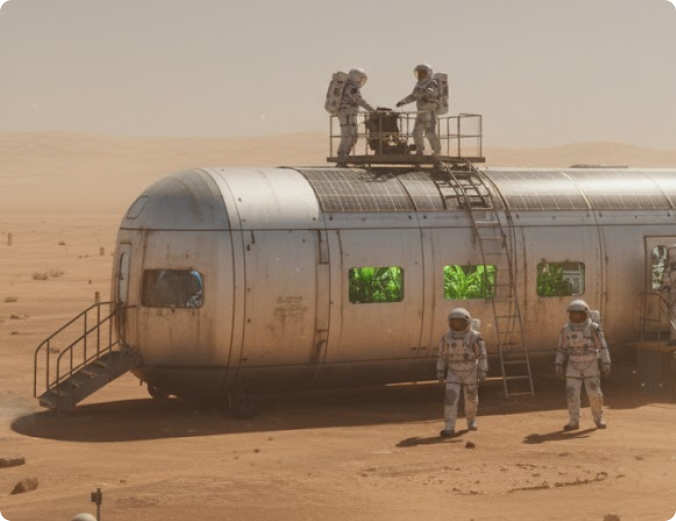
Mars Base One is a 250 m² solar-powered habitat that produces its own air, water, and food for an entire year.

Seven people live inside a fully circular ecosystem where every molecule is traced, recycled, and balanced. Sunlight is the only import; data the only export.

Integration as Innovation

The habitat relies entirely on proven technologies solar energy, water recovery, indoor farming, and environmental control.

Its novelty lies in full integration: all systems joined into one closed, testable world.

Innovation here means connection building a single, self-balancing organism from parts that already work.

How the System Works

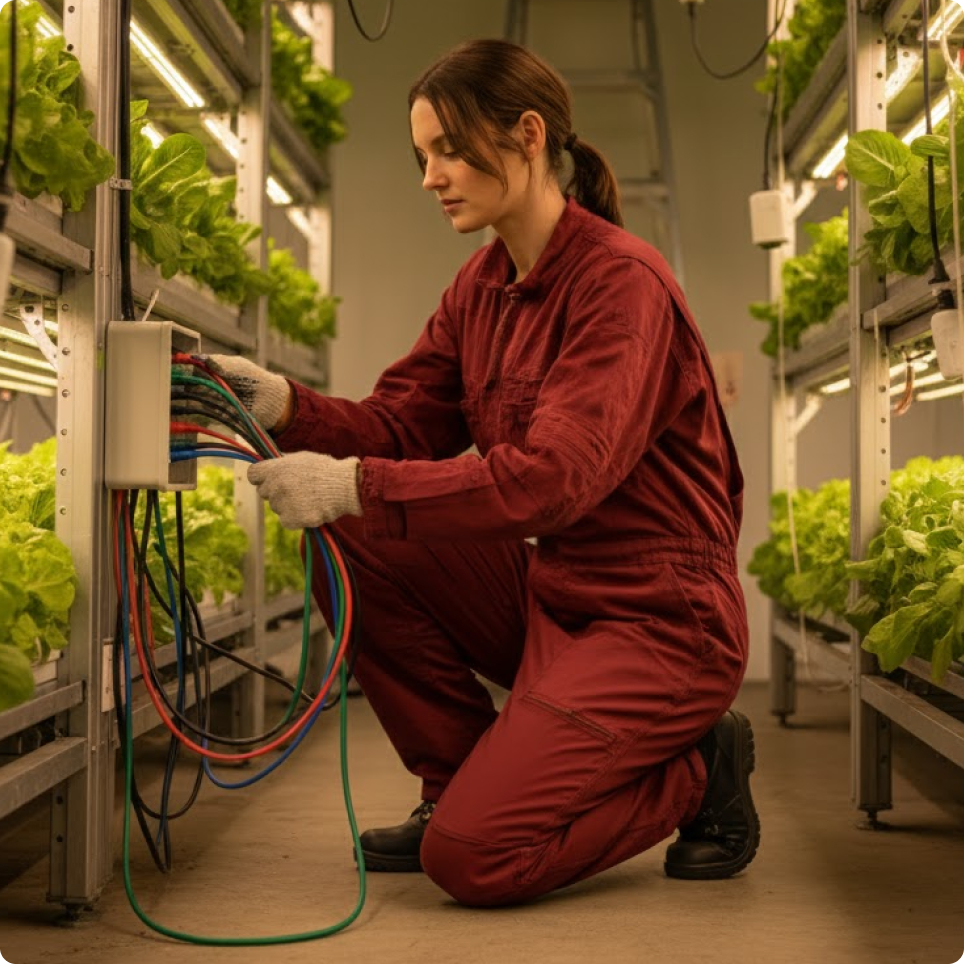
Solar panels capture light and store energy for the lights and pumps that keep plants growing.

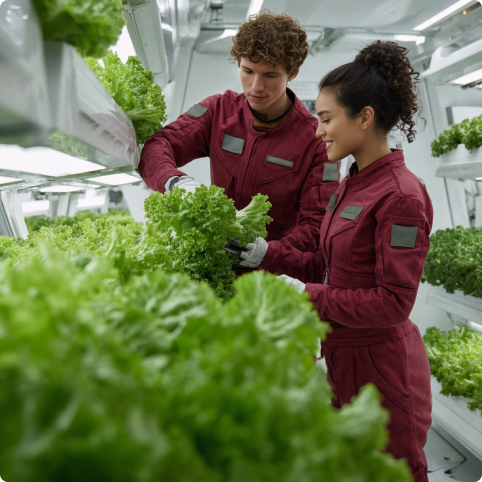
Plants produce food and oxygen while absorbing the carbon dioxide exhaled by the crew.

Water and air are cleaned and reused.

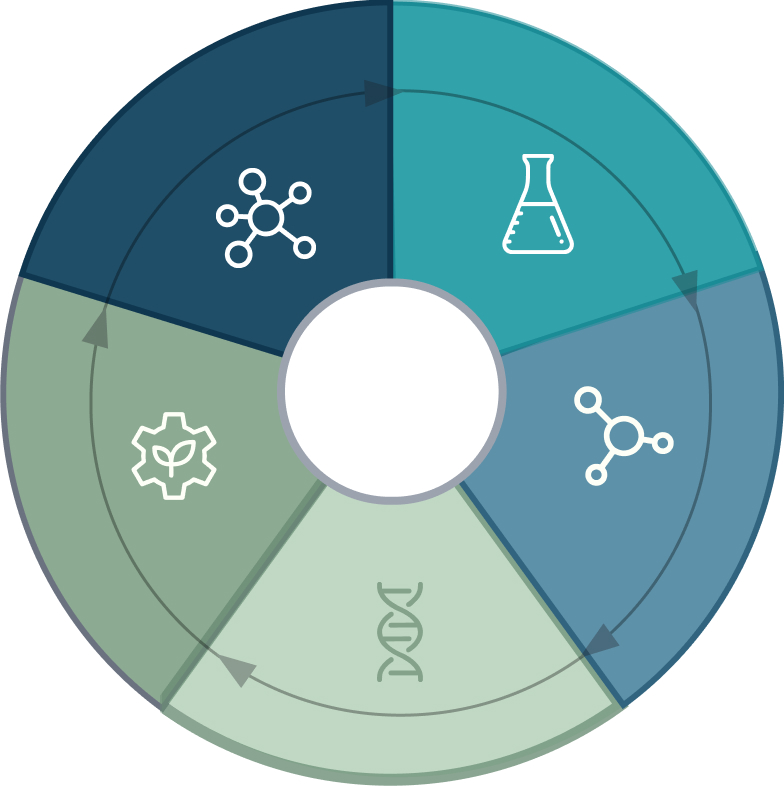
Nothing vital comes from outside; nothing is wasted — a complete, circular world in balance.

Habitat in Numbers

How the System Works

Mars Base One is a unique platform to study how plants, people, and technology sustain balance inside a sealed world.

Research for life beyond Earth must also deepen our ability to protect life on Earth.

By observing this small biosphere, we learn how to maintain the larger one linking exploration with stewardship.

Systems at a Glance

Solar panels capture light and store it in batteries.

Every drop is cleaned and reused.

Every drop is cleaned and reused.

Every drop is cleaned and reused.

Join the Mission

Every euro raised builds real infrastructure or sustains the living mission
nothing else. We partner with family offices, foundations, and research groups who value open science, stewardship, and safety